
Why the Stack Matters
A good agency stack is not a shopping list. It is an operating system: tools for content and SEO, automation, project management, analytics, and the internal workflows that connect them.
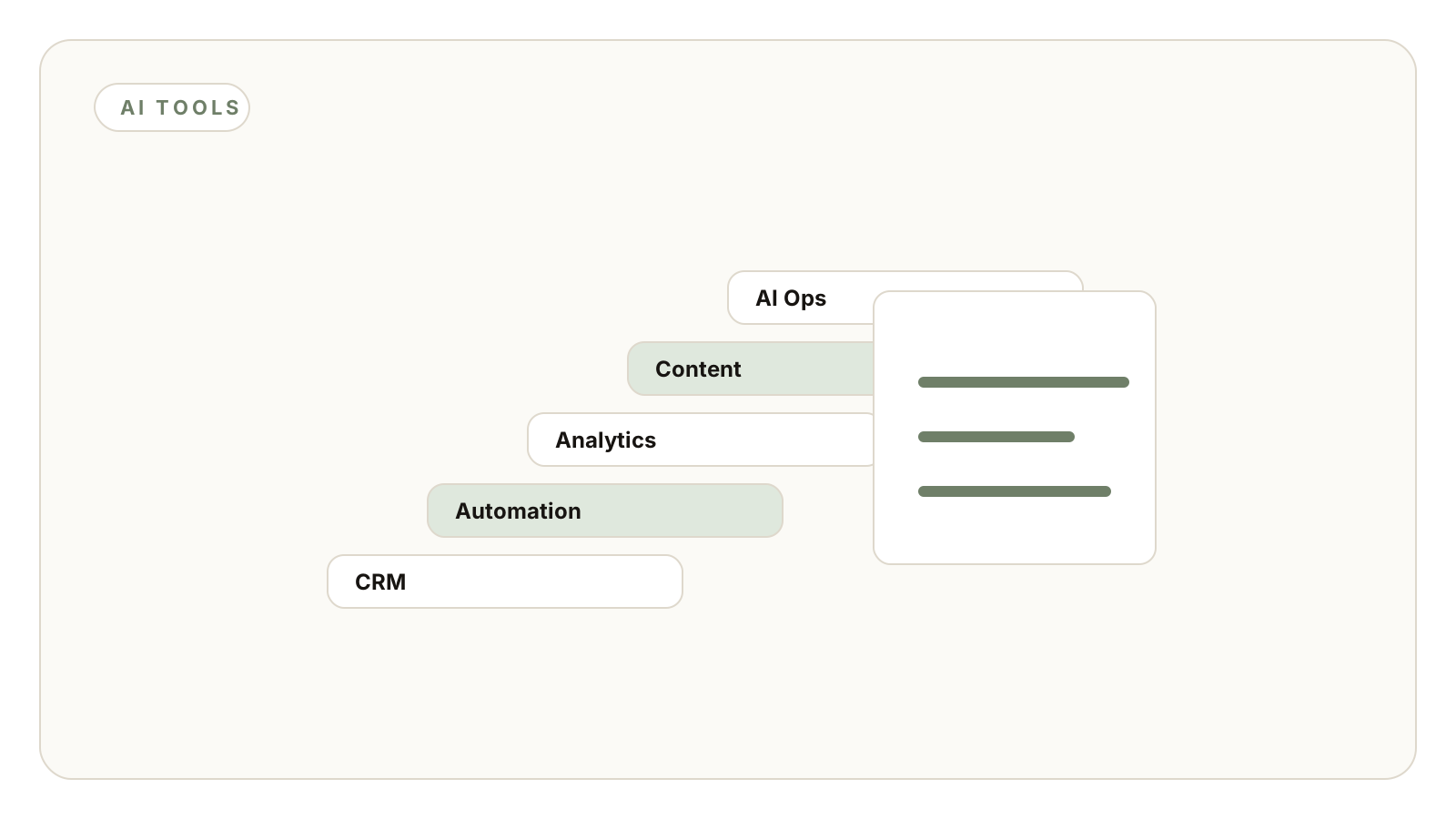
The stack breaks down into five categories: content and SEO, automation and workflows, client management, analytics, and our proprietary tools.
Content & SEO Layer
For SEO audits and keyword research, we use a combination of Ahrefs, Screaming Frog, and internal audit tools that make review faster without removing human judgment.
Content workflows should use structured briefs, source material, brand voice rules, and fact-checking. Generic AI content is weak because it has no operating context.
Schema markup can be assisted with automation, but it still needs review. The goal is cleaner structured data with fewer repetitive manual steps.
Automation & Workflow Layer
n8n works well when automation needs control, credentials, custom logic, and self-hosted infrastructure. It should have an owner, monitoring, and a clear naming system.
For simpler automations and client-facing workflows, visual tools like Make can be easier to review and hand over.
Custom Python scripts handle the heavy lifting — data processing, API orchestration, and multi-agent task execution.
Client Management Layer
Project management needs one source of truth for deliverables, owners, timelines, and approvals. The exact tool matters less than whether the team actually keeps it current.
Communication should separate fast internal discussion from formal decisions. If approvals live only in chat threads, automation will amplify confusion.
Analytics & Reporting Layer
Looker Studio or a similar dashboard layer can handle recurring reporting when the data sources are stable and the definitions are agreed upfront.
Internal analytics use a combination of Google Analytics 4, Search Console, and custom tracking pipelines that feed into our reporting automations.
Proprietary Tools
The durable advantage is not a subscription list. It is the process layer: scoring rules, QA checklists, internal scripts, reusable briefs, and the review habits that make delivery consistent.
Build custom tools only when the repeated work is clear. Otherwise, the tool becomes another thing to maintain.
Frequently Asked Questions
They should not copy it wholesale. Start with one automation platform, one writing or research tool, and one project tracker. Add layers only when the workflow demands them.
Choose n8n when control, custom logic, self-hosting, or data movement matters enough to justify maintenance.
Not currently. They're built into our service delivery. Clients get the benefit of these tools through our services without needing to license or manage them.