
The Wrong Question
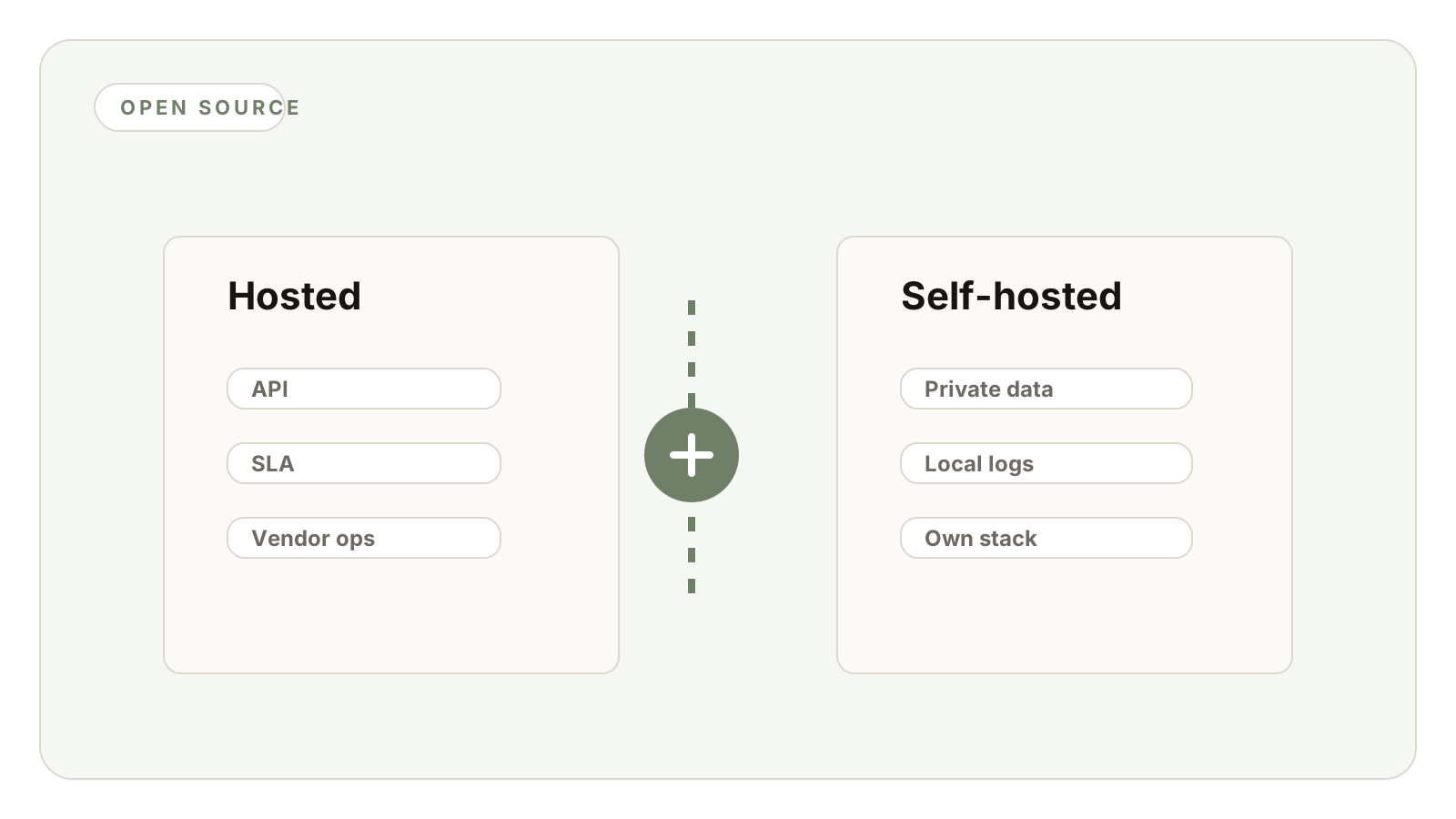
The wrong question is “which is better?” Self-hosted and hosted AI assistants are different trades. One gives you more control. The other gets you moving faster.
A small business does not win points for owning infrastructure it cannot maintain. It also should not send sensitive material into hosted systems just because setup is easy.
What Self-Hosting Gives You
Self-hosting gives you control over where the assistant runs, how data moves, and which integrations are allowed. For finance, legal, healthcare, or any client-sensitive operation, that control can be the main reason to use AI at all.
The trade is maintenance. You own updates, monitoring, backups, permissions, and the occasional failure. Free software is not free operations.
What Hosted Assistants Give You
Hosted assistants are faster to start. The vendor handles infrastructure, onboarding is usually cleaner, and non-technical teams can test use cases without a build project.
The trade is dependency. Your data passes through someone else’s system, your workflow sits inside their limits, and you accept their roadmap.
A Simple Decision Rule
Use hosted first when the work is low-risk, the team is still learning, and speed matters more than control. Use self-hosted when sensitive data, deep customization, or long-term infrastructure ownership matters.
The middle path is common: hosted for discovery and low-risk workflows, self-hosted for the operational core once the pattern is proven.
Frequently Asked Questions
It can be, but only if access control, backups, logs, and integrations are handled properly. A poorly maintained self-hosted system is not automatically safer.
No. Startups should self-host only when the control benefit is worth the operational work.
Yes. Many teams use hosted tools for low-risk workflows and self-hosted systems for sensitive or high-control operations.