
The Speed Advantage
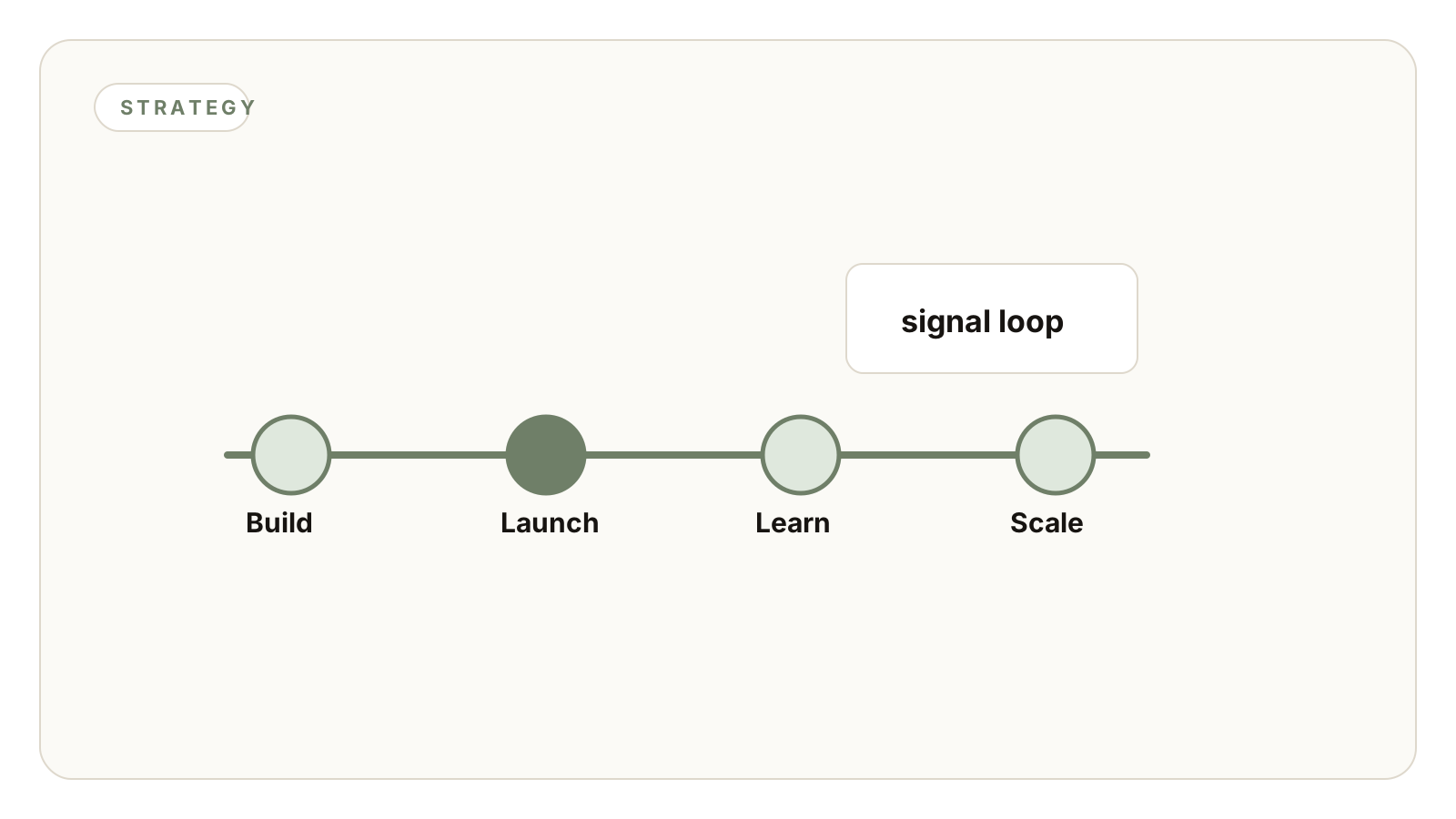
In 2026, the startups winning aren't necessarily the ones with the best products — they're the ones that get to market fastest with a good-enough product and iterate based on real customer feedback.
AI can compress parts of the go-to-market workflow: research organization, competitor mapping, copy variations, launch content drafts, and campaign analysis.
AI-Powered Market Research
Before writing a single line of copy, use AI to analyze your market. Feed competitor websites, review sites, and industry reports into AI tools and extract: positioning gaps, common customer complaints, pricing benchmarks, and underserved segments.
This does not replace talking to customers. It gives you a research base so customer calls start with better questions.
Positioning & Messaging
Use AI to generate positioning variations, then test the strongest ones with real buyers or early landing page experiments.
The goal is not infinite copy. The goal is faster learning about which promise is clear, credible, and worth acting on.
Launch Content Sprint
Your launch content stack: landing page, 5-10 SEO articles targeting your core keywords, email launch sequence, social content for 30 days, and sales deck/one-pager.
With AI assistance, a small team can draft more of this stack internally. The quality still depends on source material, review, and whether the offer is clear.
The content does not need to be perfect at launch. It needs to be specific enough to drive feedback and honest enough not to overpromise.
Growth Loops from Day One
Build growth loops into your product and marketing from the start. AI-powered referral sequences, automated onboarding that drives feature adoption, and content that feeds SEO while also serving as product education.
The most successful AI-first startups don't separate product and marketing — they build them as one system where product usage generates marketing content, and marketing drives product adoption.
Frequently Asked Questions
Keep the first budget tied to learning. Spend enough to test the offer, message, and channel quality, then scale only after the signal is clear.
For early-stage startups (pre-revenue), use AI tools directly with founder-led execution. Once you have revenue and need to scale, bring in an agency or consultant for the channels that are working.
Over-investing in brand and content before validating demand. Use AI to launch fast, test demand, then invest in polished content and branding once you know what resonates.