
The Overspending Problem
A common pattern is simple: an ad account gets some conversions, so the budget is assumed to be working. But part of that spend may still be going to weak search terms, poor placements, broad audiences, or campaigns with unclear conversion quality.
The problem isn't the platform — it's the management. Manual bid adjustments, set-and-forget campaigns, and broad targeting eat budget without accountability.
Step 1: Audit the Waste
Before touching bids, audit where money is being wasted. Pull search term reports for the last 90 days. Identify every keyword that has spent more than 2x your target CPA without converting. These are your immediate cuts.
Check placement reports for Display and Performance Max campaigns. Exclude mobile app placements, low-quality sites, and any placement with high spend and zero conversions.
Review audience segments. If you're running broad targeting, narrow to audiences with demonstrated conversion history.
Step 2: Implement Smart Bidding (Correctly)
Google's smart bidding algorithms (Target CPA, Target ROAS, Maximize Conversions) work — but only when fed clean data. If your conversion tracking is broken, your bids will be optimized for the wrong outcomes.
Before switching to smart bidding: verify conversion tracking is accurate, ensure you have at least 30 conversions in the last 30 days per campaign, and set realistic targets based on historical data — not aspirational goals.
Step 3: Layer AI Optimization
Beyond platform-native smart bidding, we use AI tools that analyze cross-platform performance and identify optimization opportunities the platforms miss.
Day-parting analysis: AI identifies the specific hours and days when conversions are cheapest and recommends bid modifiers accordingly.
Cross-campaign budget allocation: AI shifts budget from underperforming campaigns to high-performers in real-time, something manual management can't do fast enough.
Creative fatigue detection: AI monitors ad performance decay and flags when creative needs to be refreshed — before the performance cliff.
The Results
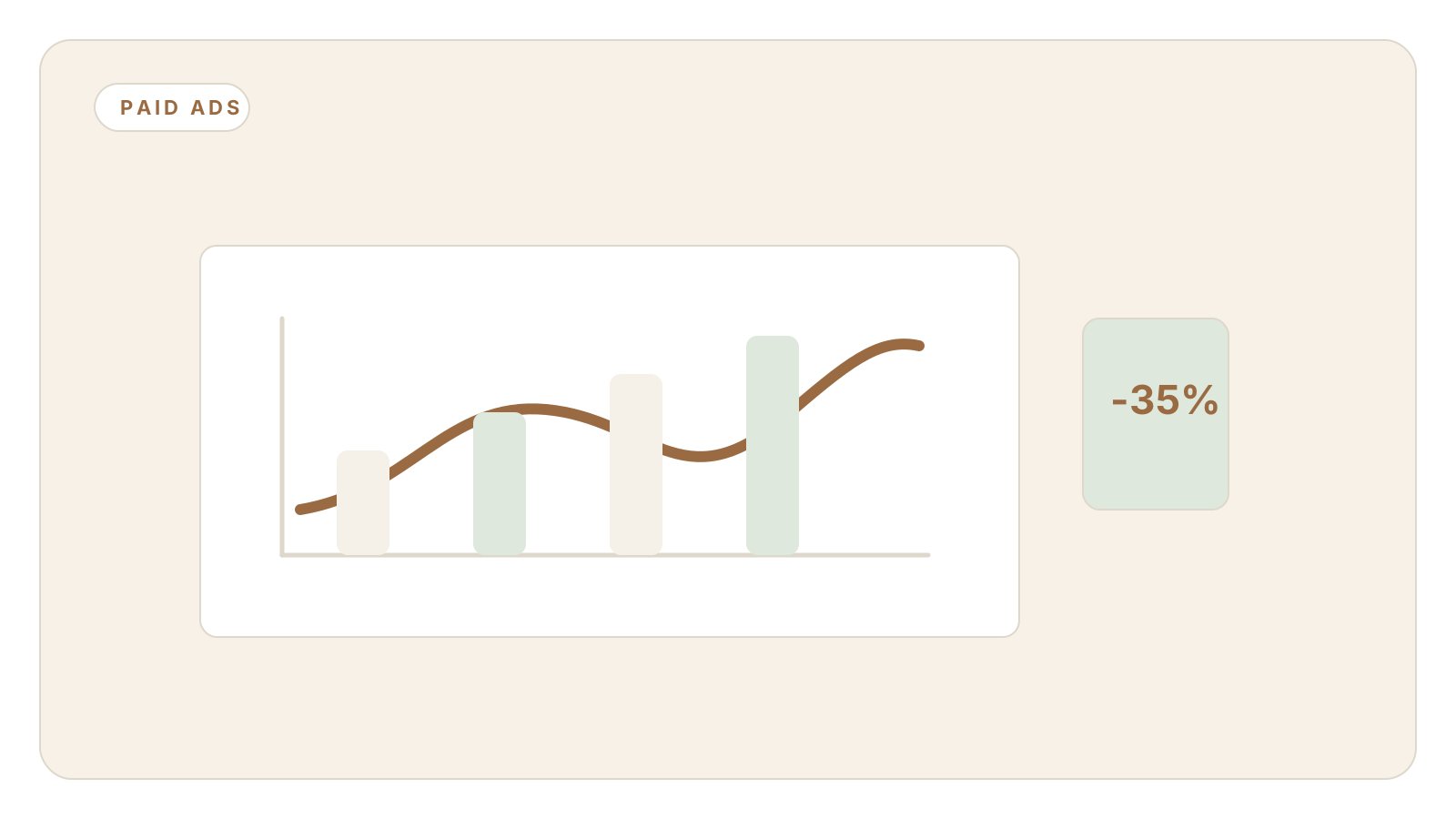
The useful result is not a fixed percentage reduction. It is a cleaner account where waste is visible, conversion tracking is trusted, and budget moves toward campaigns with evidence.
This is not magic. AI accelerates analysis, but the strategy is grounded in fundamentals: cut waste, improve tracking, refresh creative, and allocate to what works.
Frequently Asked Questions
Yes, but the approach changes. Small budgets (under $3,000/month) benefit most from waste elimination and manual CPC with AI-informed adjustments. Smart bidding needs conversion volume to work — at small budgets, you may not have enough data.
Not yet. AI handles bid adjustments, timing, and budget allocation well. But strategy, creative direction, audience research, and account structure still need human judgment.
Waste elimination can show up quickly, but bidding changes need enough clean conversion data to learn. Review changes in stages instead of judging everything after one day.